Curly Mullet Haircut: Everything You Need to Know Before Getting One
The Curly Mullet Haircut is having its moment — and it’s not going anywhere.
What once ruled the 1980s as a working-class icon has reinvented itself into one of the most searched, debated, and genuinely stylish haircuts of the mid-2020s. Whether you’ve spotted it on a football pitch, at a music festival, or scrolling through your social feed, this haircut has clearly broken free from its retro roots.
What Is a Curly Mullet?

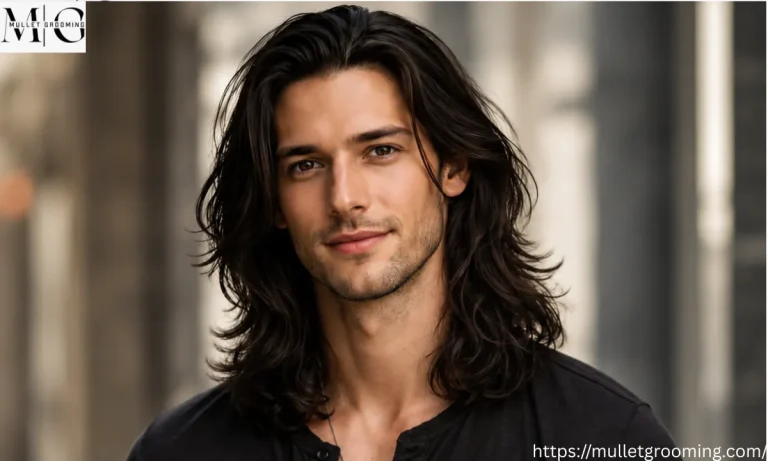
A curly mullet is a hairstyle that keeps the hair shorter at the front and sides while letting naturally curly or textured hair grow longer at the back. The “business in the front, party in the back” concept applies but with natural curl definition doing much of the heavy lifting.
Unlike the classic flat mullet of decades past, the modern mullet uses the natural volume and movement of curls to create texture, depth, and an effortlessly cool aesthetic. The sides can be faded, tapered, or left natural, and the top can range from tightly cropped to medium-length curls. The back is where the personality really shows bouncy ringlets, loose waves, or full textured locks.This hairstyle works across hair types, including natural African American curls, loose European waves, and everything in between.
History and Evolution of the Curly Mullet Haircut

The mullet predates its pop culture moment by thousands of years. Ancient Hittite and Egyptian art already showed short fronts with longer backs, proving this silhouette has always had appeal.
Its modern identity took shape in the 1970s and 1980s. David Bowie, Rod Stewart, and Paul McCartney made it iconic, and by the mid-80s it had spread from barbershops to professional ice hockey teams. Men with curly hair wore mullet-adjacent cuts during this era too, though more out of practicality than intention.The 2010s brought a quiet revival, and by the early 2020s this haircut had broken into mainstream men’s fashion. The 2024 to 2026 period has seen search interest surge consistently.
Why the Curly Mullet Haircut Is Trending

The curl acceptance movement. Over the past decade, a major cultural shift has encouraged men to embrace their natural curl patterns rather than fight them. This fits perfectly into this movement — it celebrates texture rather than suppressing it.
Social media aesthetics. Platforms like TikTok and Instagram reward visually distinctive looks. Thier photographs and films exceptionally well, with natural movement and volume that stands out in a scroll.
Athletic influence. Professional footballers, rugby players, and tennis athletes have normalized the look at the highest levels of competition. When elite athletes wear a style, it inevitably moves into mainstream culture.
Retro nostalgia with modern execution. The 1980s aesthetic has been trending for years. This curly hairstyle taps into that nostalgia while feeling genuinely contemporary when paired with modern fade techniques and styling products.
Key Features of a Curly Mullet Haircut

- Front section: Typically shorter, ranging from closely cropped to a few inches of defined curls. Some styles push curls forward into a fringe.
- Side sections: Can be tightly faded, tapered, or left with natural texture. The side treatment dramatically affects the overall feel of the cut.
- Back section: The signature element — longer curly or wavy hair that typically sits at or below the collar. The length here varies significantly between styles.
- Transition zone: Where the sides meet the back. A clean, well-executed blend in this zone is what separates a polished styling haircut from an awkward one.
Best Curly Mullet Hairstyles
Short Curly Mullet

The short mullet keeps the back section relatively brief — usually 2 to 4 inches of curl — while the front and sides stay tightly cropped. This is a great entry-level version for men trying the style for the first time. It’s low-maintenance, neat, and works well in professional environments.
Long Curly Mullet haircut
The long mullet is the boldest version. The back section can reach the shoulders or beyond, with full curly locks cascading freely. This look works best on men with well-defined curl patterns who are comfortable with a high-maintenance upkeep routine. Moisture and frizz control become especially important here.

Medium Length Curly Mullet

The medium length mullet sits comfortably between the two extremes — back hair typically falls between the nape and mid-neck. This is arguably the most balanced variation, offering strong visual impact without the commitment of a genuinely long mullet. It suits most face shapes and body types.
Layered Curly Mullet

Adding layers to a mullet creates movement and prevents the back section from looking flat or heavy. A skilled barber will cut internal layers that let each curl spring and separate naturally. Layering is especially important for men with thick, dense hair.
Textured Curly Mullet haircut

The textured mullet emphasizes the natural irregularity of curls and waves rather than trying to define every strand uniformly. The result is an intentionally messy, lived-in look that reads effortlessly cool. Texturizing scissors and light product application are used to achieve this.
Natural Curly Mullet

For men who prefer minimal styling, the natural mullet leans into the hair’s default state. There’s no heavy product, no diffusing routine, just a well-cut shape that works with the natural curl pattern. This style requires a barber who genuinely understands curly hair structure.
Soft Curly Mullet

The soft mullet uses looser curl patterns — think waves and gentle spirals rather than tight ringlets. The overall look is romantic and relaxed. This style suits men with naturally wavy hair and those who use a diffuser to soften their curl pattern.
Messy Curly Mullet

The messy mullet deliberately avoids precision. The goal is controlled chaos — defined curls at the front with wilder, undone texture at the back. It’s one of the most popular festival and creative industry looks right now.
Curly Mullet Fade

A fade added to any mullet sharpens the silhouette significantly. The hair on the sides is tapered from skin (or near skin) up to the natural length on top. This gives the cut a clean, barbershop-finished quality that balances the fuller texture on top and at the back.
Low Fade Curly Mullet haircut

The low fade drops the taper to just above the ear and the natural hairline. It preserves more hair on the sides, creating a fuller overall appearance. This works particularly well for men with round or narrow faces who want to avoid too much side reduction.
Taper Fade Curly Mullet

The taper fade takes a more gradual approach — the hair transitions smoothly from short at the bottom to its natural length higher up. It’s a cleaner, more conservative finish than a skin fade, making the taper fade mullet one of the most office-appropriate versions of this style.
Burst Fade Curly Mullet

The burst fade creates a semi-circular fade pattern around the ear, which flows naturally into the longer back section. It adds a stylized, artistic quality to the cut. The burst fade works exceptionally well with curly hair because the fade pattern mirrors the natural round shape of curl clusters.
Curly Mullet with Fringe

Adding a fringe or curtain bangs to a mullet creates a face-framing effect at the front. Curly fringes tend to sit with natural volume, drawing attention to the eyes. This style works well for men with oval or heart-shaped faces.
Korean Curly Mullet

The Korean mullet (often called a “wolf cut” in Korean barbershop culture) is a softer, more fashion-forward take. The layers are heavily feathered, the front fringe is longer, and the overall shape has a more fluid, gender-neutral quality. This version has exploded in popularity through K-pop and Korean street style influence.
Best Face Shapes for a Curly Mullet

- Oval face: The most versatile shape. Almost every mullet style works. Focus on what suits your personal aesthetic rather than what suits your face shape.
- Round face: Opt for a high fade to create height and reduce width on the sides. Avoid very low fades that keep a lot of side volume.
- Square face: Softer styles — like the soft or natural mullet — work well. A rounded curl texture softens angular jawlines effectively.
- Heart face: A fringe or curtain bang adds visual weight to the forehead, balancing a wider brow against a narrower chin.
- Oblong/Long face: Avoid extreme length at the back, which elongates the face further. A medium length mullet with a low fade adds width without adding height.
- Diamond face: This mullet with fringe is an excellent choice, as it adds fullness at the temples.
Best Hair Types for a Curly Mullet

Tight coils and kinky hair (Type 4): Requires more length to show the mullet silhouette clearly, but delivers stunning natural volume. Moisture is critical.
Curly hair (Type 3): The classic mullet candidate. Ringlets and spiral curls define naturally with the right product routine.
Wavy hair (Type 2): Works well for the soft and messy mullet variations. A diffuser and curl-enhancing product can amplify wave definition.
Straight hair: A traditional straight mullet is more appropriate, but men with straight hair can use a perm or texturizing treatment to introduce curl before attempting this style.
How to Ask Your Barber for a Curly Mullet

- Bring reference photos. Find two or three images that represent what you want. Be specific — show the fade style, the back length, and the front section separately if needed.
- State the back length. Say whether you want the back to sit at the nape, the collar, or longer.
- Specify the fade style. Low fade, taper fade, or burst fade — use the correct term.
- Mention your curl type. A good barber who understands curly hair will cut the hair dry (or at least check it dry) to account for shrinkage.
- Ask about the transition. Specifically ask how they plan to blend the side fade into the back length. This is where amateur cuts tend to fall apart.
- Discuss maintenance. Ask what the cut will look like at 4, 6, and 8 weeks without a touch-up.
Step-by-Step Styling Guide

What you’ll need: Microfibre towel, curl-defining cream or gel, a diffuser attachment, and a light finishing oil or serum.
Step 1: Wash your hair with a sulfate-free shampoo and a moisturizing conditioner. Detangle gently while the conditioner is in.
Step 2: After washing, do not rub your hair dry. Scrunch excess water out with a microfibre towel or an old cotton T-shirt.
Step 3: While hair is still damp, apply a curl cream or defining gel from roots to ends through the back section. Use less product on the shorter front section.
Step 4: Scrunch the back section upward to encourage curl formation. If you have a looser wave pattern, use a diffuser at low heat and medium airflow.
Step 5: Diffuse until about 80% dry, then let the hair air-dry the rest of the way. This prevents frizz caused by too much heat.
Step 6: Once fully dry, scrunch out any crunch or stiffness from the gel. Use a tiny amount of finishing oil on the palms and lightly run through the back section for shine and separation.
Step 7: Style the front section last. You can push curls forward, sweep them to one side, or leave them natural depending on your preferred look.
Best Hair Products for Curly Mullet Hair
| Product Type | Purpose | Best For |
| Sulfate-free shampoo | Gentle cleansing without stripping natural oils | All curl types |
| Deep conditioner | Weekly moisture treatment | Dry or thick hair |
| Curl cream | Defines curls and reduces frizz | Type 2–3 curls |
| Hold gel | Strong definition and shape retention | Type 3–4 curls |
| Finishing oil | Adds shine and tames flyaways | All curl types |
| Leave-in conditioner | Daily moisture without wash | Dry and coarse hair |
| Sea salt spray | Adds texture and wave definition | Wavy hair (Type 2) |
Look for products free from sulfates, silicones, and drying alcohols. The curly hair community’s “Curly Girl Method” product criteria is a useful guide, even if you don’t follow the method strictly.
Curly Mullet Maintenance Tips

Trim every 6–8 weeks. Curly hair hides split ends better than straight hair, but that doesn’t mean they’re not there. Regular trims keep the shape sharp.
Deep condition weekly. The longer back section is more vulnerable to dryness and breakage. A weekly conditioning mask makes a meaningful difference.
Sleep on a satin or silk pillowcase. Cotton absorbs moisture and causes friction that breaks up curl definition overnight. Satin pillowcases protect the curl pattern while you sleep.
Refresh curls on non-wash days. A spray bottle with water and a tiny amount of leave-in conditioner can revive the back section between washes without requiring a full wash-and-dry routine.
Avoid excessive heat. If you diffuse, keep the temperature low. Repeated high heat breaks down the curl pattern over time.
Protect in summer. UV exposure dries out hair. Apply a UV-protectant product or wear a hat when spending long periods in direct sun.
Curly Mullet haircut vs Straight Mullet

| Feature | Curly Mullet | Straight Mullet |
| Natural texture | Requires natural curl or wave | Works with straight or fine hair |
| Volume | High — curls add significant volume | Lower — relies on length for impact |
| Maintenance | Moderate to high (moisture-focused) | Low to moderate |
| Styling time | 15–30 minutes (with diffusing) | 5–15 minutes |
| Fade compatibility | Excellent — curl texture contrasts cleanly | Good — cleaner lines are easier to see |
| Visual impact | Bold and expressive | Classic and understated |
| Modern feel | Very high — aligns with current trends | Moderate — more retro aesthetic |
| Versatility (occasions) | Casual to smart-casual | Casual to smart-casual |
| Face shape flexibility | Works across most shapes with right variation | More dependent on specific face shape |
| Product requirements | Curl cream, gel, finishing oil | Pomade or wax usually sufficient |
Pros and Cons
Pros
- Highly distinctive and memorable look
- Natural curls do much of the style work once the cut is right
- Works across multiple variations to suit different preferences
- Photographically versatile — looks dynamic in still photos and video
- Suitable for many different face shapes with the right variation
- Can be adapted from conservative (taper fade) to bold (long, free-flowing back)
Cons
- Requires a barber who genuinely understands curly hair structure not all do
- Maintenance is higher than many simpler cuts, particularly for the back section
- Grow-out phase can look awkward, especially when transitioning from a shorter style
- High-humidity environments can disrupt curl definition
- May not be appropriate for all workplace dress codes
Common Mistakes to Avoid

Choosing a barber who doesn’t work with curly hair. This is the single biggest risk. Always check a barber’s portfolio specifically for curly clients before booking.
Ignoring shrinkage. Curly hair can shrink significantly when dry compared to when wet. A barber who cuts your hair wet without accounting for shrinkage will leave you with something far shorter than planned.
Skipping deep conditioning. The mullet’s longer back section is more prone to dryness and frizz, especially as it grows. Skipping conditioning rapidly degrades the look.
Over-applying product. More product does not equal better definition. Too much gel or cream weighs down curls and creates a greasy, clumped appearance.
Not communicating the back length clearly. “Leave it long at the back” means different things to different barbers. Use a specific measurement or photo reference.
Neglecting the transition zone. A poorly blended area where the fade meets the longer back hair is the most common technical failure in curly cuts. Ask specifically about this before your barber starts.
Frequently Asked Questions
1. Is a curly mullet suitable for all hair types?
It works best with naturally curly or wavy hair (Type 2–4). Men with straight hair can achieve a similar look with a perm or texturizing treatment, but the natural version relies on existing curl texture.
2. How long does it take to grow a curly mullet?
Starting from a standard short cut, expect 6–12 months to reach a medium-length mullet. The process can be managed with regular shape trims during the grow-out phase to keep the sides and front neat while the back develops.
3. Can I get a curly mullet if I have thin hair?
Yes, but modifications help. A low fade rather than a high skin fade preserves more side density. Layering the back section adds the appearance of volume without requiring thick hair.
4. How often should I wash my curly mullet?
Most curly hair specialists recommend washing 2–3 times per week. Over-washing strips natural oils that maintain curl definition and moisture balance.
5. What’s the difference between a wolf cut and a curly mullet?
The wolf cut (popularized in East Asian fashion) is closely related it uses heavy layering throughout and tends to have a softer, more blended silhouette. A traditional mullet has more defined contrast between the short front/sides and longer back. Many modern curly mullets incorporate wolf cut layering techniques.
6. Will a curly mullet look professional enough for work?
It depends on the variation and your workplace culture. A taper fade mullet with a medium-length back reads significantly more polished than a long, free-form natural curly mullet. Many men successfully wear this hairstyle in corporate settings.
7. How do I prevent frizz in the back section of a curly mullet?
Use a microfibre towel (not terry cloth), apply a curl cream or gel while hair is still wet, diffuse at low heat, and finish with a light serum. A satin pillowcase prevents friction frizz while sleeping.
8. Can I dye my curly mullet?
Yes, but coloring dries out curly hair significantly. Always follow a color treatment with a deep conditioning session, and increase your moisture-focused product usage afterward. Highlights and balayage techniques that avoid the roots tend to be less damaging than full-color applications.
9. What’s the best curly mullet style for a round face?
A high fade curly mullet works best for round faces. The high fade reduces side volume and visual width, while the longer back and fuller top create vertical height that balances proportions.
10. How do I maintain curl definition day after day without rewashing?
Use a refresh spray (water plus a small amount of leave-in conditioner) spritzed lightly over the back section each morning. Scrunch upward gently to reactivate the curl pattern. Avoid touching the curls while they’re drying after refreshing, as handling wet curls causes frizz.
Final Verdict
The curly mullet haircut is one of those rare hairstyles that manages to feel both nostalgic and genuinely contemporary at the same time. When executed well, it’s visually striking, versatile across occasions, and critically it actually works with natural curl texture rather than fighting it.
The key to getting it right lies in three areas: choosing a barber who understands curly hair, picking the right variation for your face shape and hair type, and committing to a solid moisture-focused maintenance routine. Get those three things right, and this haircut pays consistent dividends. Whether you go for a clean taper fade mullet that works in the office, a burst fade with full natural curls for a more expressive look, or the soft, flowing layers of a Korean mullet there’s a version of this cut that fits almost every man willing to embrace it.