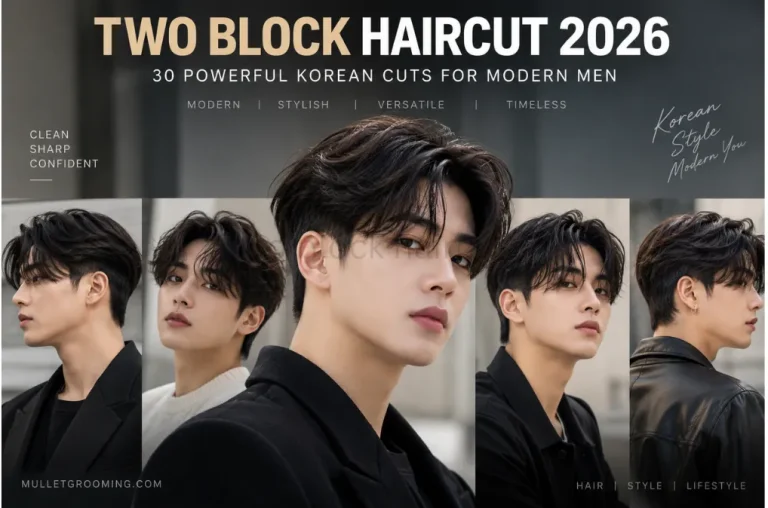
Shag Mullet Haircut
| |

Shag Mullet Haircut: Everything You Need to Know Before Getting One

The Shag mullet haircut sitting at the intersection of three decades of men’s grooming history, and it is having a very good moment right now. In 2026 the shag mullet has moved well past novelty status. It appears in serious barbershop portfolios, in men’s grooming editorial content, and on men who wear it with full intention and confidence. If you are considering getting one, or simply trying to understand what the term actually means when you see it, this guide covers everything from the technical definition to the daily styling routine.

What Is a Shag Mullet?

Shag Mullet Haircut

The shag haircut is heavily layered with texture and movement distributed fairly evenly throughout, plus a fringe at the front and layers that lengthen gradually toward the back without a sharp contrast. Its defining trait is uniform texture.

The mullet, by contrast, is built on length contrast: short top and sides, noticeably longer back, with relatively smooth surfaces throughout.The shag mullet merges the two. It keeps the mullet’s length contrast, short top and sides, longer back, but layers both zones with the shag’s texture and movement, creating something neither style delivers alone.

History and Evolution of the Shag Mullet

Shag Mullet Haircut

The shag haircut emerged in the late 1960s and peaked through the 1970s, popularized by rock and glam rock musicians for its dramatic layering and fringe. Its defining trait was loose, democratic texture, a clear break from structured, uniform cuts.

The mullet developed alongside it as the dominant 1980s men’s hairstyle. While both shared longer back lengths, the mullet’s identity was contrast, not texture, so the two styles coexisted but stayed distinct.

Both fell out of fashion through the 1990s. Their comebacks followed similar timelines, and the shag mullet emerged when stylists combined the two: the shag’s layering fixed the mullet’s flat-back problem, while the mullet’s contrast gave the shag more structure.Korean and Japanese stylists later refined the hybrid, giving it the polish that turned it into a real style category. By 2024 it had its own identity in mainstream grooming content, and by 2026 it is fully established.

Why the Shag Mullet Is Trending

Shag Mullet Haircut

It solves problems that both source styles have individually. The classic shag lacks structural contrast, which can make it look shapeless on certain face shapes and hair types. The traditional mullet lacks texture and movement throughout the top and sides. The shag mullet addresses both: the layering adds movement everywhere, and the length contrast adds structure that prevents the cut from sitting without direction.

The layering works for an unusually wide range of hair types. Heavy layering throughout a cut tends to benefit almost every hair type differently: it removes bulk from thick hair, adds apparent density to fine hair, and enhances natural texture in wavy and curly hair. This versatility means the shag mullet suit more men than either the shag or the mullet does on its own.

Korean and Japanese barbershop culture has elevated the execution standard. The versions of the shag mullet developed in Seoul and Tokyo demonstrate a level of precision and movement that raises expectations for the cut globally. When men see what the cut can look like at its best, it drives interest.

It reads differently depending on how it is worn. A polished, deliberately styled shag mullet reads as a fashion choice. The same cut air-dried and minimally styled reads as casual and effortless. That flexibility across different personal aesthetics and settings is a genuine practical advantage.

Key Features of a Shag Mullet Haircut

Shag Mullet Haircut

Layering distributed throughout every section. Unlike a standard mullet where the top is flat and the back is smooth, the shag mullet has layers in both zones. The layering creates texture and movement that defines the entire cut rather than being concentrated in one area.

Length contrast from front to back. Despite the layering, the mullet’s fundamental structure remains intact: the front and sides are noticeably shorter than the back section. The contrast may be softer than in a classic mullet because the layers blend the transition, but it is present and deliberate.

Fringe at the front, typically. Most shag mullet variations include some form of fringe, whether a curtain fringe parted down the middle, a textured wispy fringe, or a more blunt version. The fringe is one of the shag’s most recognizable features and its inclusion in the hybrid reinforces the style’s heritage.

Shaggy, textured ends. The ends throughout the cut are point-cut or razor-cut to create soft, separated tips rather than blunt uniform lines. This shaggy quality is present in the top section, through the sides, and in the back.

Natural movement as a design goal. The cut is built to move with the person wearing it. The layers interact with gravity and air to create dynamic movement that static cuts cannot replicate.

Best Shag Mullet Hairstyles

Short Shag Mullet

Short Shag Mullet

The back sits at collar length. The layering is prominent throughout but the overall scale is compact. The fringe, if present, falls above the eyebrows or at brow level. This is the most wearable variation across different environments.

Long Shag Mullet

Long Shag Mullet

The back extends to shoulder length or beyond. The layers through the back section become more complex at this length because longer hair needs more internal structure to prevent it sitting heavy and flat. The fringe at the front creates a dramatic contrast with the long back layers.

Medium Length Shag Mullet

Medium Length Shag Mullet

The back falls between collar and shoulder. This length shows all the defining features of the shag mullet at a scale that is manageable without being minimal. The layering has enough length to properly develop while the maintenance demands remain reasonable.

Layered Shag Mullet

Layered Shag Mullet

A version where the layering is the deliberate focal point. The layers are cut to be highly visible and create pronounced separation between sections. The back section shows the most dramatic layering, creating a cascading effect that draws attention.

Textured Shag Mullet

Textured Shag Mullet

Razor work and slide cutting create extremely soft, almost feathered ends throughout. The result is an airy, light quality rather than the heavier shag character of the standard version. This variation sits closest to the soft mullet end of the hybrid spectrum.

Curly Shag Mullet

Curly Shag Mullet

Natural curls combined with shag layering create a voluminous, visually rich result. The curl pattern enhances the layered effect and provides texture that no product can replicate. The barber must understand curly cutting to avoid a shape that looks correct when wet but completely different when the curls spring back.

Wavy Shag Mullet

Wavy Shag Mullet

Natural wave patterns complement the shag mullet’s layering naturally. The wave adds movement that makes the layers appear more dynamic without product. The back section on wavy hair develops a flowing quality that is one of the most appealing expressions of the style.

Straight Shag Mullet

Straight Shag Mullet

Straight hair delivers the cleanest, most defined layer separation of any hair type. The layers are visually distinct and the ends are precisely shaggy rather than organically textured. The trade-off is that straight hair needs more product support to maintain separation and movement.

Korean Shag Mullet

Korean Shag Mullet

The Korean interpretation emphasizes polish and deliberate styling over the casual, organic quality of Western versions. The fringe is typically more carefully shaped. The layers are more precisely executed. The overall result reads as fashion-forward and intentional rather than effortlessly undone.Korean hairstylists have contributed specific techniques for feathering and layer placement that give this version its distinctive movement and volume balance.

Japanese Shag Mullet

Japanese Shag Mullet

The Japanese version shares the Korean precision but tends toward stronger contrasts. The back length may be more dramatic relative to the top. The disconnection between sections is often more pronounced. The influence of Japanese street fashion gives it a distinct aesthetic edge.

Soft Shag Mullet

Soft Shag Mullet

A gentler interpretation where the layering is present but less aggressive. The transitions between sections are blended softly. The fringe, if present, is wispy rather than defined. The overall effect is relaxed and approachable rather than dramatic.

Messy Shag Mullet

Messy Shag Mullet

The deliberately undone version. The layers are cut to maximize organic movement and the styling routine emphasizes a lived-in quality. Air drying with sea salt spray is the primary technique. The messier the better within reason.

Shag Mullet Fade

Shag Mullet Fade

A fade on the sides adds structural definition alongside the organic texture of the shag mullet. The fade creates clean lines that contrast with the deliberately shaggy top and back. This combination suits men who want precision and organic texture simultaneously.The fade needs maintenance every three weeks to keep the contrast clean and intentional.

Shag Mullet with Fringe

Shag Mullet with Fringe

When the fringe is the deliberate focal point of the cut, it becomes a variation in its own right. Curtain fringes parted down the middle, referencing 1970s rock aesthetics most directly, tend to work best with the shag mullet structure. They frame the face and create a front visual anchor that balances the back length.

Taper Fade Shag Mullet

Taper Fade Shag Mullet

The taper fade blends gradually from longer to shorter as it moves down the sides and back of the head without reaching a skin finish. This creates definition without the sharp contrast of a skin fade. Paired with the shag mullet’s layering, the result is simultaneously structured and organic.

Best Face Shapes for a Shag Mullet

Oval faces suit the shag mullet without requiring specific adjustments. Most variations work naturally on this face shape.

Round faces benefit from the back length, which creates vertical elongation, and from the fringe variations, which draw attention forward and upward. The combination reduces the appearance of width that round faces tend to show.

Square faces are softened significantly by the shag mullet’s layered, textured quality. The organic ends and layered movement introduce curves that contrast with angular jaw lines in a flattering way. The fringe further softens the forehead line.

Heart-shaped faces, wider at the forehead and narrowing to the chin, suit the shag mullet when the fringe is kept light and wispy rather than heavy. The back length adds visual weight below the jaw line and helps balance the face shape.

Diamond faces benefit from the fringe, which adds width at the forehead, and from the back length, which adds width at the neck. Both effects balance the prominent cheekbones.

Long or oblong faces need specific consideration. The back length can extend an already long vertical line. Keeping the back at short to medium length rather than very long, and using the fringe to add visual width at the forehead, maintains facial balance. The layering’s added volume at the sides also helps.

Best Hair Types for a Shag Mullet

Shag Mullet Haircut

Wavy hair is the most naturally compatible hair type. Wave patterns enhance the layered effect organically and create the movement the style is built around without product dependency.

Curly hair produces dramatic results when cut properly. Curls amplify the layered volume significantly and the natural texture aligns perfectly with the shaggy quality the cut aims for. Requires a skilled barber.

Thick hair holds the shape well and benefits enormously from the internal weight removal that the layering provides. Without layering, thick hair sits too heavily in the shag mullet structure.

Straight hair gives the cleanest, most defined layer separation. Needs product to add movement and prevent flatness, but the layers themselves look precise and intentional.

Fine or thin hair benefits from the layering’s apparent volume effect. The shaggy ends create the impression of more density. Keep the back at medium rather than long length to prevent gravity from flattening fine hair.

How to Ask Your Barber for a Shag Mullet

Shag Mullet Haircut

Bring two to four reference photos showing your preferred variation from different angles. Top, sides, back, and overall silhouette. The shag mullet has significant internal variation and verbal descriptions rarely capture the specific balance you have in mind. During the consultation, cover each section specifically:

Fringe: Do you want a curtain fringe, a wispy textured fringe, a blunt fringe, or no fringe at all?

Top: How much volume do you want at the crown? Should the top be clearly shorter than the back or more gradual?

Sides: Blended shag layering, taper fade, or skin fade? How much contrast between the sides and the fuller top?

Back: Target length in actual measurements. How visible should the layering be? Heavy and shaggy or more subtle?

Finish: Deliberately messy and organic, or more polished and defined?

Ask your barber to finish the cut dry and styled in your normal way. The shag mullet looks different wet versus dry and you need to see the real result before leaving.

Verify their experience with this specific cut. The techniques involved, point cutting, razor work, internal layering, are not part of every barber’s standard practice. Their portfolio tells you whether they have done it before.

Step-by-Step Styling Guide

Step 1: Start with towel-dried hair that is damp but not dripping. Product applies more evenly and holds better on damp hair.

Step 2: Apply your chosen product through the back section first, using fingers to work it through the layers and encourage separation rather than smoothing them flat.

Step 3: Work product through the sides, then through the top and fringe section.

Step 4: For volume at the crown, flip your head forward, scrunch the top section, then flip back and arrange the fringe and top in the desired direction.

Step 5: Blow dry using a diffuser for wavy and curly hair. For straight hair, use a standard nozzle on medium heat with a round brush to direct the crown and fringe. For the messy variation, skip the blow dryer entirely and air dry.

Step 6: Once dry, use fingers to separate any sections that have clumped and to add final texture to the shaggy ends throughout.

Step 7: Finish with a light hold spray to set the separation and volume through the day without hardening the texture.

Best Hair Products for a Shag Mullet

ProductBest ForHoldFinish
Sea salt sprayAll types, natural texture and movementLightMatte, natural
Texture pasteStraight and wavy hair, layer definitionMediumMatte
Curl creamCurly and wavy hair, definition without frizzLightNatural
Volumizing mousseFine hair, adding body throughoutLight-mediumNatural
Matte clayThick hair, control and textureMedium-highMatte
Light pomadePolished Korean or Japanese variationsMediumLow shine
Dry shampooRefreshing volume on non-wash daysLightNatural
Light hold hairsprayFinishing and setting separationLightVaried
Deep conditionerBack section, weekly maintenanceN/AN/A

Shag Mullet Maintenance Tips

shag mullet haircut

Sides: Every three to five weeks for blended layering or taper. Every three weeks for a skin fade to keep the lines clean.

Top and layering: Every four to five weeks to maintain the layered structure before it grows out into a shapeless mass.

Back section: A light point-cut trim every six to eight weeks maintains the shaggy ends and prevents split ends from traveling up the hair shaft. Trim only the tips if you are growing the length.

Washing: Every two to three days rather than daily. The layered back section depends on natural oils for healthy movement and daily washing removes them faster than short hair requires replenishment.

Conditioning: Deep condition the back section weekly. Longer layered hair shows damage at the ends first and regular conditioning prevents the kind of breakage that makes a shag mullet look unintended rather than styled.

Between washes: Dry shampoo at the roots absorbs oil and refreshes the volume. A light scrunch of the back section with slightly damp hands reactivates most texture products.

Shag Mullet vs Wolf Cut

FeatureShag MulletWolf Cut
Length contrastPronounced front-to-back contrastLess contrast, more even distribution
Top sectionShorter relative to back, may have fringeVoluminous crown, layered throughout
SidesLayered and blended, sometimes fadedHeavily layered, usually blended
BackShaggy layers with length contrastLayered but length is more uniform
FringeCommon feature, often curtain styleSometimes present, not defining feature
Structural originShag layering meets mullet contrastWolf cut with possible mullet influence
Volume focusThroughout, especially back sectionPrimarily at crown and top
Cultural reference1970s shag meets 1980s mullet1970s rock, Korean contemporary
Overall characterRetro texture meets mullet structureHigh-volume, dramatic, fashion-forward
Best hair typeWavy, curly, most typesWavy, curly, thick especially
MaintenanceEvery 4 to 6 weeksEvery 3 to 5 weeks

Shag Mullet vs Classic Mullet

FeatureShag MulletClassic Mullet
TopShorter with layering and possible fringeShort, flat, no layering
SidesLayered and texturedTapered or faded, smooth
BackShaggy, heavily layered, moving endsSmooth, uniform length, no layering
Texture throughoutMaximum texture across every sectionClean, smooth surfaces throughout
FringeUsually present, defining featureAbsent in traditional versions
TransitionSofter, blended by layeringSharp contrast between zones
SilhouetteOrganic, dynamic, layeredStructured, defined, clean
Cultural roots1970s shag meets 1980s mulletDirectly 1970s to 1980s nostalgic
Styling approachScrunch, diffuse, maximize textureSmooth, directional, minimal product
Best hair typeWavy, curly, fine hair benefit mostStraight or lightly wavy
Barber skill neededHigh, layering and razor techniquesModerate, cleaner execution
Maintenance visitsEvery 4 to 5 weeksEvery 4 to 6 weeks
Overall impressionRetro texture, organic, editorialNostalgic, bold, structured

Pros and Cons

Pros

  • Works across a wider range of hair types than either the shag or the mullet alone
  • The layering adds volume and movement that flatters many different face shapes
  • Multiple variations from subtle to dramatic suit different personalities and settings
  • The fringe adds a front dimension that most mullet variations lack
  • Bridges 1970s and 1980s aesthetics in a way that feels current rather than costume-like
  • Korean and Japanese variations demonstrate the high ceiling the cut can achieve
  • Grows out more gracefully than sharply contrasted cuts

Cons

  • Requires a barber with specific layering and texturizing experience
  • The fringe adds a styling step that some men find inconvenient daily
  • Back section needs consistent conditioning and periodic trimming
  • Not suitable for conservative professional environments in more dramatic lengths
  • Growing from a short cut takes five to ten months depending on target length
  • Straight hair needs significant product support for movement and volume
  • Can look undone if maintenance slips, since layered cuts show neglect quickly

Common Mistakes to Avoid

Not bringing reference photos. The shag mullet encompasses enormous variation. Describing it verbally without visual reference almost always results in misalignment between what you wanted and what you received.

Choosing a barber without relevant portfolio work. Point cutting, razor work, and internal layering are specific skills. Not every barber applies them regularly. Check their previous work before booking.

Over-applying product. Heavy product weighs layers together and eliminates the separated, textured effect that defines the shag mullet. Always start with less than you think you need.

Ignoring the fringe maintenance. The fringe grows faster than most other sections and quickly obscures the face or loses its shape without regular trimming. Keep a pair of texturizing scissors for minor fringe touch-ups between barber visits.

Washing too frequently. Daily washing strips the natural oils that layered hair relies on for health and movement. Every two to three days is the correct frequency.

Skipping the deep conditioning routine. The back section of a shag mullet, being longer and more layered, dries out and splits faster than shorter sections. Weekly conditioning is maintenance, not optional.

Expecting the cut to style itself without technique. The shag mullet needs intentional styling to look its best. Skipping the diffusing step or not working product through the layers properly produces a flat result that loses most of the cut’s character.

Frequently Asked Questions

What exactly is a shag mullet?

A shag mullet merges the shag haircut’s heavy layering, textured ends, and fringe with the mullet’s fundamental short-front, long-back length contrast. The result has texture and movement throughout every section alongside the structural contrast that defines the mullet.

How is a shag mullet different from a wolf cut?

A shag mullet maintains a clear front-to-back length contrast that the wolf cut does not necessarily have. The wolf cut distributes its layering and volume more evenly, with the emphasis on crown volume rather than length contrast. The shag mullet sits more firmly in mullet territory while the wolf cut sits more in shag territory.

Does a shag mullet always need a fringe?

No. A fringe is a common feature and appears in most shag mullet variations because it is one of the shag’s defining elements. However, variations without a fringe exist and still qualify as shag mullets through their layering approach and length contrast. Discuss with your barber whether a fringe suits your face shape and styling preferences.

Can someone with straight hair get a shag mullet?

Yes. Straight hair gives the clearest, most defined layer separation of any hair type in the shag mullet structure. The challenge is maintaining movement and volume without natural wave or curl to help. Sea salt spray or texture paste applied to damp hair before drying, combined with a round brush during blow drying, compensates for the absence of natural texture.

How long does it take to grow a shag mullet from a short cut?

From a standard short haircut, a recognizable shag mullet shape with medium back length typically appears in five to seven months. A fully developed version with pronounced back length takes ten to fifteen months. Hair grows approximately half an inch per month.

Is the shag mullet high maintenance?

It sits in the moderate to high maintenance range. Daily styling takes ten to twenty minutes and requires technique rather than just product application. Barber visits every four to five weeks maintain the structure. The back section needs weekly deep conditioning. It is more demanding than a simple short back and sides but less demanding than some highly technical cuts with very tight fades.

What products should I avoid with a shag mullet?

Avoid heavy pomades and waxes that weigh the layers together and eliminate the separated, textured effect. Avoid oil-based products that make the layers look limp or greasy. Avoid anything that creates stiffness or crunchiness, which contradicts the natural, organic quality the shag mullet is designed to have.

Can the shag mullet work for professional environments?

Shorter variations with subtle layering and a taper fade on the sides can work in most office settings. The Korean soft variation is the most polished and professional-friendly of the options. More dramatic versions with heavy fringe, very long backs, or skin fades are better suited to creative industries.

How often should I visit my barber to maintain a shag mullet?

Every four to five weeks for the sides and top to keep the layered structure from growing out shapeless. Every six to eight weeks for a light trim on the back section ends. Faded sides need visiting every three weeks to maintain the clean contrast.

What face shapes does the shag mullet suit best?

The shag mullet is genuinely versatile across face shapes. Round faces benefit from the back length and crown texture. Square faces are softened by the layered, organic ends. Oval faces suit most variations without adjustment. Heart and diamond faces work well with the fringe variation. Long faces need shorter back length to avoid exaggerating the vertical dimension.

Final Verdict

The shag mullet has earned its place in men’s hair right now through genuine versatility, not just trend. It combines two historic styles in a way that fixes each other’s weaknesses: the mullet gains texture and movement it never had, while the shag gains the structural contrast it was missing.

Getting it right takes a barber experienced in layering and texturizing, plus a real consultation conversation. Maintenance means consistent conditioning and regular visits, and daily styling becomes routine quickly with practice.If you want a haircut with real character and movement, the shag mullet is worth serious consideration. Find a barber with it in their portfolio, bring reference photos, and have an honest conversation about what your hair can do. That is where good haircuts begin.

Similar Posts

Leave a Reply

Your email address will not be published. Required fields are marked *