
Mullet with Middle Part: The Complete 2026 Style Guide
The mullet with a middle part gives the classic mullet a modern upgrade. By combining a center part with layered length at the back, it creates a hairstyle that’s stylish, versatile, and full of natural movement. It suits straight, wavy, and curly hair, making it a popular choice for anyone who wants a bold look that’s easy to adapt for both everyday wear and special occasions. In this guide, you’ll discover the best styles, barber tips, styling advice, maintenance, and everything you need to know before getting the cut.
What Is a Mullet with the Middle Part?
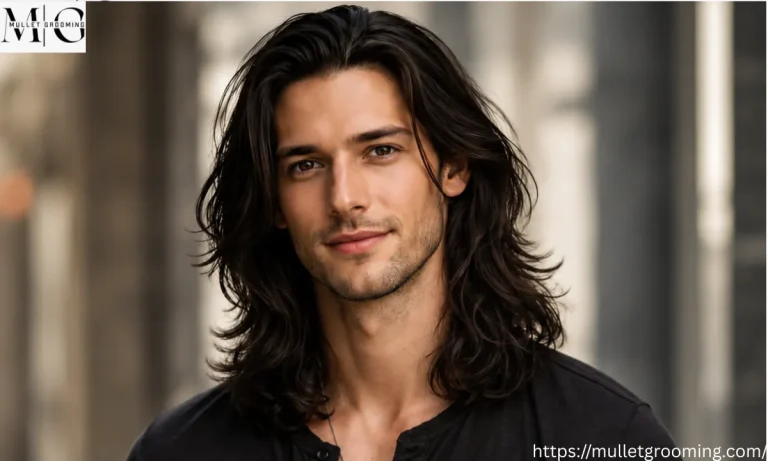
A mullet with a middle part combines the classic mullet shape with a modern center-part hairstyle. The hair is split evenly down the middle, creating a balanced look, while the back remains longer with textured layers for extra movement. Tapered or faded sides keep the style clean and contemporary. Unlike the bulky ’80s mullet, this version feels lighter, more natural, and perfectly suited to today’s fashion trends.

A Brief History: Why the Mullet Is Back
The mullet dates back centuries in various forms, but it became a defined hairstyle in the late 1970s and exploded through the 1980s thanks to musicians like David Bowie and Rod Stewart. It fell out of fashion through the ’90s and 2000s, often mocked as outdated.
Its revival began around 2019–2020. Nostalgia for retro aesthetics, Gen Z’s love of “ironic” styles, and a broader shift toward individuality all played a part.
The center part addition came later. It blends the mullet’s bold shape with the soft, face-framing quality of a middle-parted fringe, a combination that photographs well and works for both casual and dressed-up occasions.
Mullet with Middle Part: Hairstyle Variations
One of the biggest strengths of this haircut is its flexibility. Here are the variations I get asked for most often, ranked roughly by how frequently they show up in my chair.
1. Modern Mullet Fade with Middle Part
This version pairs a tight skin fade or taper fade on the sides with longer, center-parted hair on top and a moderate length at the back. The modern mullet fade with the middle part is the most barbershop-friendly variation because the fade keeps things sharp while the top stays expressive. It’s a favorite among younger clients who want an edgy but still polished silhouette.

2. Short Mullet with Middle Part
For those easing into the trend, a short mullet with middle part keeps the back length minimal (just past the nape) and the top short enough to manage with minimal product. It’s subtle, low-maintenance, and works well in conservative workplaces while still nodding to the mullet shape.

3. Middle Part with Short Mullet and Taper
A close cousin to the above, this combines a tapered side (rather than a hard fade) with a short mullet back. Tapers grow out more gracefully than fades, so this is a smart choice if you don’t want frequent touch-ups.

4. Curly Mullet with Middle Part
Curly and wavy hair naturally creates volume at the part, giving this variation a tousled, almost vintage rock-and-roll look. The curls at the back add texture without needing much styling product.

5. Long Shaggy Mullet with Middle Part
This is the maximalist version: long layers throughout, a deep center part, and a back that reaches the collar or beyond. It’s the closest to the ’70s rocker aesthetic and works best on those with thick or medium-density hair.

6. Mullet with Middle Part and Bangs/Curtain Fringe
Here, the front sections are styled to curve outward like curtains, framing the face. This blends two major trends, the curtain fringe and the mullet, into one cohesive look that’s especially popular for oval and heart-shaped faces.

7. Textured Crop Mullet with Middle Part
A choppy, razor-textured top paired with a subtle center part and a cropped mullet back. This works well for fine hair because the textured layers create the illusion of density.

Comparison Table: Mullet with Middle Part Variations
| Variation | Best For | Maintenance Level | Hair Type |
| Modern mullet fade with middle part | Bold, trend-forward looks | High (fade upkeep every 2–3 weeks) | Straight, wavy |
| Short mullet with middle part | Workplace-friendly, first-timers | Low | All types |
| Middle part mullet with taper | Low-fuss everyday wear | Medium | Straight, wavy |
| Curly mullet with middle part | Natural texture, vintage vibe | Low | Curly, coily |
| Long shaggy mullet with middle part | Statement, rocker aesthetic | Medium | Thick, medium |
| Mullet with curtain fringe | Face-framing, softer look | Medium | Straight, wavy |
| Textured crop mullet with middle part | Fine or thin hair | Medium | Fine, straight |
Best Face Shapes for a Mullet with Middle Part
A skilled barber will always adjust the cut to your bone structure, but here’s a general breakdown of how this style works across common face shapes.
Oval Face Shape
Oval faces are considered the most versatile, and the mullet with the middle part is no exception. The center part adds gentle width at the crown without overwhelming proportional features. Nearly every variation listed above works well here.

Square Face Shape
A square jaw benefits from the soft, layered movement of a center-parted mullet, which breaks up sharp angles. I usually recommend keeping some length and waviness around the temples to soften the jawline further.

Round Face Shape
Round faces should approach the middle part with a bit more caution, since a center part can emphasize width. To balance this, ask for added height at the crown and longer layers at the back to create vertical lines that elongate the face.

Heart-Shaped Face
The curtain-fringe variation works beautifully here. The outward-framing pieces around the forehead balance a wider brow and narrower chin.

Diamond Face Shape
Diamond faces have higher cheekbones, and the middle part draws attention to this naturally. A shaggy or layered mullet softens the cheekbone area while keeping interest at the crown.

Rectangular/Long Face Shape
For longer faces, avoid too much height on top. A flatter crown with more width at the sides, like the modern mullet fade with the middle part, helps balance proportions.

Best Hair Types for This Style
Not every hair type styles a mullet with a middle part the same way. Here’s what to expect based on your texture.
- Straight hair: Holds a crisp, defined part easily but may need a texturizing product to avoid looking flat. Works great for the fade and curtain-fringe variations.
- Wavy hair: Arguably the easiest hair type for this cut. Waves naturally fall away from the center part and add movement at the back without much effort.
- Curly hair: Curls create natural volume and texture, which suits the shaggier, more textured variations. A diffuser and curl cream are your best friends.
- Coily hair: This style can absolutely work on coily hair, though the back length will appear shorter due to shrinkage. A barber experienced with textured hair should handle the layering.
- Fine hair: Choose shorter variations with strategic layering to create the illusion of thickness. Heavy products should be avoided, as they can weigh fine strands down.
- Thick hair: Thick hair handles the longer, shaggier mullet variations exceptionally well, since there’s enough density to support volume at the crown and weight at the back.
How to Ask Your Barber for a Mullet with a Middle Part
Getting the perfect mullet with a middle part starts with clear communication. Follow these simple tips to help your barber understand exactly what you want:
- Bring reference photos to show your preferred length, middle part, and overall style.
- Choose the back length by deciding whether you want a short, subtle mullet or a longer, shaggy finish.
- Explain the sides by asking for a fade, taper, or natural trim based on your style preference.
- Request a natural middle part with soft, layered texture instead of a sharp, defined part.
- Ask for textured layers using point-cutting or a razor to create a lighter, more modern look.
- Discuss maintenance so your barber can recommend a cut that matches how often you’re willing to get trims.
Sample Script to Use in the Chair
“I’d like a mullet with a middle part. Keep the top long enough to part down the middle and layered so it falls naturally. I want the back at [collar length / a few inches longer] with shag layers, and the sides [tapered / faded] so it’s not too dramatic a contrast.”
Step-by-Step Styling Guide
Here’s the exact routine I walk clients through after their first cut.
Step 1: Start with Damp, Towel-Dried Hair
Wet styling gives you the most control. Towel-dry until hair is damp, not soaking.
Step 2: Apply a Lightweight Product
Work a small amount of sea salt spray, texturizing cream, or light mousse through the top section before drying. This sets the foundation for texture and hold.
Step 3: Create the Part with Your Fingers, Not a Comb
Run your fingers from the crown forward to find your natural part line. Fingers create a softer, more lived-in part than a fine-tooth comb, which tends to look too precise for this style.
Step 4: Blow-Dry with a Round or Vent Brush
Direct airflow downward and slightly outward from the part on each side. This encourages the hair to fall away from the center rather than flopping forward.
Step 5: Add Texture to the Back
Scrunch a texturizing paste or clay into the back and crown sections to enhance the shaggy, layered look. Avoid combing this section smoothly. Texture is the whole point.
Step 6: Finish with a Light Hold Product
A flexible-hold pomade or texture spray locks the style in place without looking stiff or wet. Avoid heavy gels, which can flatten the layered movement that defines this cut.
Step 7: Air-Dry Day Styling
On non-wash days, a dry texturizing spray and a quick finger-comb through the part is usually all you need to refresh the look.
Best Hair Products for a Mullet with Middle Part
| Product Type | Purpose | Best For |
| Sea salt spray | Adds grit and natural-looking texture | Wavy, straight hair |
| Texturizing clay | Matte finish, medium hold, separates layers | All hair types |
| Light-hold pomade | Defines the part without stiffness | Straight, fine hair |
| Curl cream | Defines curls, reduces frizz | Curly, coily hair |
| Volumizing mousse | Builds root lift before blow-drying | Fine, thin hair |
| Dry texturizing spray | Refreshes style between washes | All hair types |
| Heat protectant spray | Shields hair during blow-drying | All hair types |
Pro tip: Avoid heavy waxes and high-shine gels for this style. The mullet with the middle part relies on movement and separation, and overly slick products work against that effect.
Maintenance Tips
Keeping this cut looking sharp requires a bit more attention than a standard short back-and-sides, but it’s far from high-maintenance if you stay consistent.
- Trim every 4–6 weeks for faded or tapered sides; every 8–10 weeks if you’re growing out a longer, shaggier version.
- Wash 2–3 times a week rather than daily. Natural oils help the texture and part hold better, especially for wavy and curly hair.
- Use a leave-in conditioner on the longer back sections to prevent split ends and dryness.
- Sleep on a silk or satin pillowcase to reduce frizz and friction, particularly important for the longer back length.
- Get regular trims at the nape, since this area can look unkempt fastest if neglected.
- Re-evaluate the part during growth phases. As hair grows, the natural part can shift slightly, so don’t be afraid to ask your barber to adjust the layering every couple of cuts.
- Deep condition monthly, especially if you color or bleach the longer sections.
Pros and Cons of a Mullet with Middle Part
No haircut is perfect for everyone, and I’d rather be upfront with clients than oversell a style. Here’s the honest breakdown.
Pros
- Highly versatile, works across straight, wavy, curly, and coily hair types
- Offers two distinct looks (sleek and tousled) from one haircut
- Suits most face shapes with minor adjustments
- Lower daily styling effort once you learn the routine
- Distinctive and on-trend without being as polarizing as a traditional mullet
- Works for both casual and semi-formal settings
Cons
- Requires more frequent trims if you choose a fade-based variation
- Can look unintentional or messy if layers aren’t cut correctly
- Center parts can emphasize a round face shape if not balanced with crown height
- Growing it out from a different style takes patience (usually 4–6 months)
- Not universally accepted in very conservative workplace dress codes
- Styling has a learning curve, especially for first-time mullet wearers
Mullet with Middle Part vs. Other Popular Men’s Haircuts
| Haircut | Styling Effort | Versatility | Trend Status | Best Hair Type |
| Mullet with middle part | Medium | High | Rising/current | All types |
| Classic side-part mullet | Medium | Medium | Stable | Straight, wavy |
| Curtain fringe (no mullet back) | Low–Medium | High | Stable | Straight, wavy |
| Buzz cut | Very low | Medium | Stable | All types |
| Textured crop | Medium | High | Stable | Straight, fine |
| Long layered shag | Medium–High | High | Rising | Thick, wavy, curly |
Who Should Avoid This Style?
While the mullet with middle part suits most people, it’s worth being honest about who might want to think twice:
- Those in highly traditional or formal corporate environments where longer hair at the nape may not meet dress codes.
- Anyone who isn’t willing to commit to at least a few months of growing out the back section, since a true mullet shape needs length contrast to read clearly.
- People with very thin, fragile hair who may find the longer back section thins out and looks wispy rather than textured, though a good barber can adjust layering to compensate.
Celebrity and Cultural Influence
The center-parted mullet has been embraced by musicians, athletes, and actors as part of the broader 1970s revival in men’s fashion. It frequently appears alongside other retro trends like flared denim, vintage band tees, and wide-collar shirts, reinforcing its identity as a style statement rather than just a haircut. Its popularity on social platforms has also made it one of the most-searched men’s hairstyles in barbering communities over the past few years.
Frequently Asked Questions
1. What is a mullet with a middle part called? It’s most commonly referred to as a “modern mullet with middle part” or “center-part mullet.” Some barbers also call it a “shag mullet with part” when the layering is especially heavy.
2. Does a middle part suit a mullet haircut? Yes. A middle part adds softness and face-framing movement to the mullet’s naturally bold silhouette, making it feel more modern and less retro than a traditional mullet.
3. How long does hair need to be for a mullet with a middle part? The top generally needs at least 3–4 inches of length to part comfortably down the middle, while the back should be at least an inch or two longer than the sides to create the mullet contrast.
4. Is the mullet with the middle part a high-maintenance haircut? It depends on the variation. A faded version requires trims every 2–3 weeks, while a tapered or shaggy version can go 8–10 weeks between cuts with minimal daily styling.
5. Can I get a mullet with curly hair in the middle part with curly hair? Absolutely. Curly hair actually enhances this style by adding natural texture and volume, especially at the back and crown.
6. What face shapes should avoid a middle part with a mullet? No face shape is fully excluded, but round faces should ask their barber to add height at the crown to avoid emphasizing width.
7. How do I grow out my hair into a mullet with a middle part? Most people need 4–6 months of growth, with regular trims to keep the shape controlled while the back catches up in length. Your barber can shape interim cuts to ease the transition.
8. What products work best for styling a mullet with a middle part? Lightweight texturizing products like sea salt spray, texturizing clay, and light-hold pomade work best. Heavy gels and waxes tend to flatten the layered movement this style relies on.
9. Is a mullet with a middle part appropriate for the workplace? It depends on your industry. Creative fields, hospitality, and casual workplaces are generally accepted, while more traditional corporate or client-facing roles may require a shorter, more tapered variation.
10. How often should I trim a mullet with the middle part? Every 4–6 weeks for faded sides, or every 8–10 weeks if you’re maintaining length with a taper or shaggy back.
11. Can women wear a mullet with a middle part too? Yes, this is also a popular unisex style. Women often add more length and layering throughout for a softer, shaggier finish.
12. What’s the difference between a mullet with a middle part and a curtain fringe mullet? A curtain fringe mullet emphasizes face-framing pieces that curve outward at the front, while a standard middle-part mullet simply divides the top hair down the center without the curved framing effect.
13. Does this haircut work with a beard? Yes, the mullet with the middle part pairs well with most beard styles, particularly a medium-length beard that balances the volume on top and at the back.
14. How do I ask my barber for the modern mullet with the middle part specifically? Bring a reference photo, specify the back length and side treatment (fade vs. taper), and ask for a natural, finger-styled center part rather than a precise comb-over part.
15. Will a mullet with a middle part work with fine or thinning hair? Yes, with adjustments. Shorter back lengths and strategic layering create the illusion of density, and lightweight volumizing products help avoid a flat appearance.
Final Thoughts
The mullet with a middle part is a modern hairstyle that combines classic attitude with today’s relaxed, textured look. Whether you prefer a short, clean version or a longer, shaggy style, the right cut and layering make all the difference. Choose an experienced barber, bring reference photos, and use lightweight styling products to keep your hair looking its best. With the right approach, this versatile haircut can easily become your signature style.